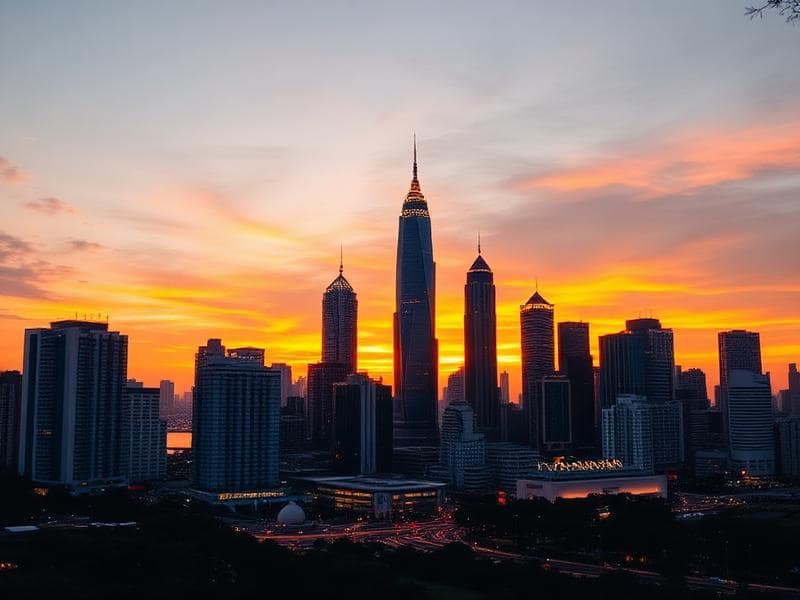
How Many Days Does Jakarta Actually Need?
Two, for most travelers — not the four or five you might spend in Bali or working through Java's temple circuit. Jakarta's worthwhile sights cluster into two or three areas, and a well-planned two-day stay covers Kota Tua, Monas, Istiqlal and one food-focused evening without feeling rushed. Add a third day only if a Thousand Islands trip or Taman Mini genuinely interests you, or if you're using Jakarta as a business base rather than a sightseeing one. Treating it purely as an airport changeover between Bali and the rest of Indonesia is common and understandable, but it undersells a city with a real old town, a striking mosque-and-cathedral pairing, and one of the better street-food scenes in the country. If you're deciding how to split time between the two, our Jakarta vs Bali comparison lays out which suits which kind of trip.
Kota Tua — Jakarta's Dutch Colonial Old Town
Kota Tua ("old town") is the former center of Dutch Batavia, a cluster of colonial-era buildings around Fatahillah Square, home to a handful of museums including the Jakarta History Museum in the old city hall. It's genuinely walkable, though the buildings are more atmospheric than pristine — this isn't a polished, restored old town in the European sense, and that rougher edge is part of what makes it interesting. Guided walking tours that pair Kota Tua with a food stop are a common booking here, usually running a few hours and covering the square's history alongside nearby street-food stalls. Renting a colorful vintage bicycle to loop the square is a popular, low-cost add-on. Go in the late afternoon rather than midday — the square has almost no shade, and Jakarta's heat is unrelenting by noon.
Monas and the National Museum
The National Monument (Monas), a tall gold-flame-topped obelisk, sits at the center of Merdeka Square and functions as Jakarta's most recognizable landmark. An elevator runs to an observation deck near the top, giving a genuine, if often hazy, view across the city — book a slot rather than assume you'll walk straight up, since queues build fast on weekends and holidays. Nearby, the National Museum holds a strong collection of Indonesian archaeology and ethnography, including Hindu-Buddhist stone sculpture that pairs well with a Java temple trip elsewhere on your itinerary. Budget half a day for both if you want more than a quick photo stop.
Istiqlal Mosque and the Cathedral Directly Across the Street
This is Jakarta's most underrated pairing. Istiqlal Mosque is Southeast Asia's largest mosque, a vast modernist concrete structure built to hold well over 100,000 worshippers, and it sits directly across the street from Jakarta Cathedral, a Neo-Gothic Catholic church built under Dutch rule. The two buildings facing each other across a single road, both open to respectful visitors outside prayer and mass times, make a striking half-hour stop that most Jakarta itineraries skip entirely. Dress modestly for both — shoulders and knees covered — and a mosque-provided robe is usually available if you turn up under-dressed. Entry to either building is generally free, though a small donation at the cathedral is customary.
Glodok — A Chinatown Food Walk
Glodok, just south of Kota Tua, is Jakarta's Chinatown and one of the best places in the city for a food-focused evening. Narrow lanes packed with decades-old stalls serve everything from noodle dishes to roast pork to sweet iced desserts, and a handful of guided food walks run through here specifically, usually in the early evening when the stalls are in full swing and the day's heat has dropped. It's dense and a little chaotic, and best done with someone who already knows which stall is worth the queue — a guide earns their fee here more than almost anywhere else on this list.
Planning this trip?
Tours and day trips in Jakarta sell out first in July, August and over New Year. Booking ahead usually costs the same and guarantees the date.
See Jakarta tours & pricesThousand Islands (Kepulauan Seribu) — A Real Day Trip
Kepulauan Seribu, a scatter of small islands in the bay north of Jakarta, is the one genuine beach-and-snorkeling escape within day-trip range of the city. Speedboat transfers from Jakarta's marina run roughly 45 minutes to just over an hour depending on the island, and a typical day-trip package covers the boat transfer, a stop at one or two islands, and snorkeling gear, usually landing in the $40-90 per person range depending on the operator and islands included. It's a genuinely different pace from the rest of the city — clearer water, small fishing villages, low-key resorts — worth it if you have a spare day and want a break from concrete and traffic. Book a package rather than the public ferry independently unless you're comfortable navigating it in Bahasa Indonesia.
Taman Mini Indonesia Indah
Taman Mini is a large cultural theme park on Jakarta's outskirts, built around a central lake, with pavilions representing every one of Indonesia's provinces, a cable car, and a scattering of museums. It's aimed as much at domestic visitors and school trips as at foreign tourists, and it shows — some pavilions are polished, others look tired, and the place rewards picking two or three sections rather than trying to see all of it. If you're not seeing much of Indonesia beyond Jakarta and Bali, it's a reasonable crash course in the country's regional diversity in a single afternoon. If Yogyakarta, Lombok or Flores are already on your itinerary, you'll get the real version of most of what's on display and can skip it without missing much.
Malls as an Actual Activity, Not a Filler
Jakarta's malls are part of the city's culture, not just an air-conditioned refuge from the heat, though they're that too. Places like Grand Indonesia, Plaza Indonesia and Senayan City combine high-end retail with genuinely good food courts, cinemas and, in some cases, indoor theme parks or ice rinks — treating an afternoon mall visit as sightseeing is normal here, and locals do it constantly. It's also one of the more reliable ways to escape the heat and afternoon downpours without losing the day.
Coffee and Street Food
Jakarta's coffee scene runs from traditional kopi tubruk (coarse-ground coffee brewed directly in the cup) at old-school kedai kopi to a genuinely serious third-wave specialty scene in neighborhoods like Kemang and Senopati. Street food is the stronger draw for most visitors: nasi goreng, sate, gado-gado and soto variants from carts and small warungs, often better and cheaper than anything in a hotel restaurant. Pair a coffee stop with a food walk through Glodok or Kota Tua rather than treating them as separate outings — the best spots in both areas sit close enough together to combine in one evening.
The Traffic Problem — and Why It Dictates Your Itinerary
Jakarta's traffic is not a minor inconvenience to plan around; it's the single biggest factor in how your days should be structured. Crossing the city at the wrong hour can turn a 20-minute distance into 90 minutes, and rush hour runs longer here than in most cities — expect slow going roughly 7-9am and again 4-8pm. The practical fix is to cluster your day by area rather than zig-zagging: pair Kota Tua and Glodok since they're a short walk apart, pair Monas and Istiqlal since they're a few minutes by car, and treat Thousand Islands and Taman Mini as their own dedicated day rather than an add-on to something else. Jakarta's MRT, and the older TransJakarta busway, have genuinely changed what's realistic for tourists — the MRT line running north-south through the business district avoids traffic entirely and is worth building a route around if your hotel sits anywhere near a station. Where you stay affects this more than in almost any other Indonesian city; see our best hotels in Jakarta for 2026 for picks near the MRT and the main sightseeing clusters, or Hotel Merlin Jakarta for a central base.
If Jakarta is one stop on a wider Indonesia trip, our guide to the best time to visit Indonesia covers how the wet season affects city sightseeing specifically — shorter, sharper downpours than Bali sees, but they still shut down an outdoor afternoon fast.
Frequently Asked Questions
How many days do you need in Jakarta?
Two, for most travelers. That covers Kota Tua, Monas, Istiqlal Mosque and one food-focused evening without rushing. A third day is worth adding only for a Thousand Islands trip or Taman Mini, or if Jakarta is a business base rather than a sightseeing stop.
What are the best things to do in Jakarta?
Kota Tua's colonial old town, Monas and the National Museum, the Istiqlal Mosque and cathedral pairing directly across the street from each other, a Glodok Chinatown food walk, and a Thousand Islands day trip by speedboat are the strongest bookable experiences.
Does Jakarta's traffic really affect sightseeing that much?
Yes — it's the biggest factor in planning a Jakarta itinerary. A 20-minute distance can take 90 minutes at the wrong hour, so cluster activities by area (Kota Tua with Glodok, Monas with Istiqlal) rather than crossing the city repeatedly, and use the MRT where your route allows it.
Ready to Explore?
Browse curated tours and activities across Indonesia with our trusted partners.
View Tours & Activities