Location
Lesser Sunda Islands
Best For
Luxury & Culture
Beaches
World-Famous
Vibe
Spiritual & Vibrant
Why Bali Remains Indonesia's #1 Destination
Bali needs no introduction. This small island has captured the world's imagination with its unique blend of Hindu spirituality, jaw-dropping natural beauty, and a hospitality industry that ranges from $10/night guesthouses to $5,000/night clifftop villas. In 2026, Bali continues to evolve with new luxury openings, improved infrastructure, and a growing focus on sustainable tourism.
A honeymoon in Ubud, a surf trip to Canggu, a weekend in Seminyak — each calls for a different base, and picking the wrong area costs you hours in traffic. This guide covers Bali's best hotels area by area, for every budget.
Where to Stay in Bali
Ubud — Cultural Heart
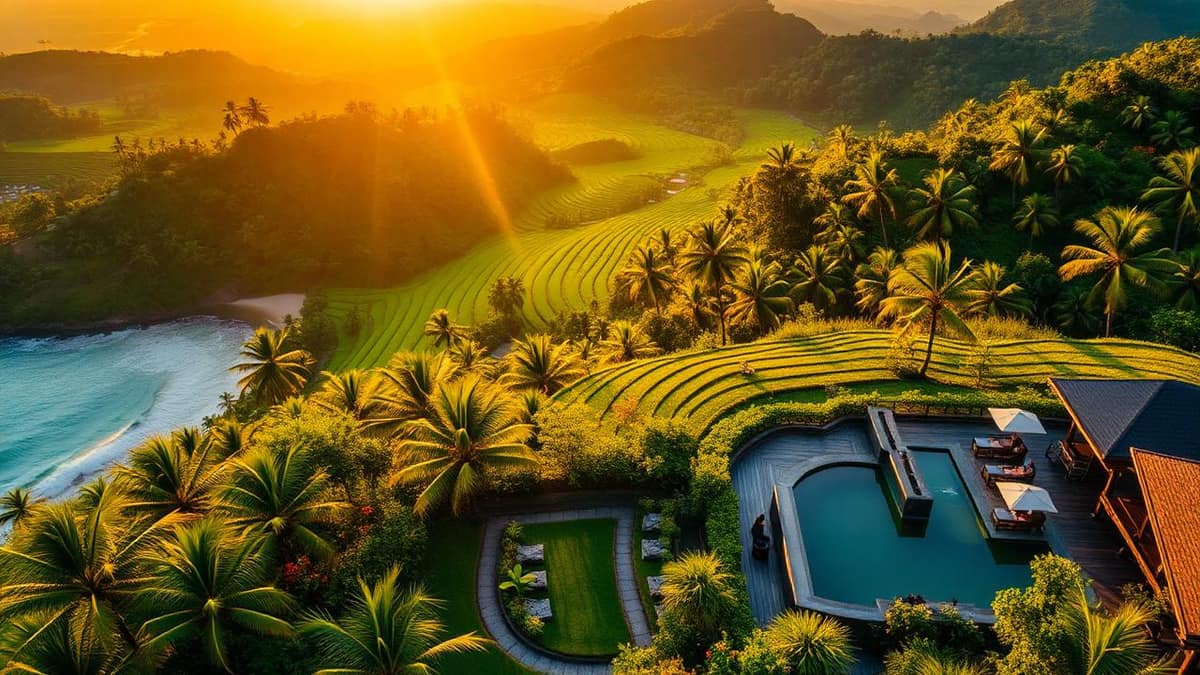
Rice terraces, art galleries, yoga retreats and the Sacred Monkey Forest fill the daytime hours; nights are quiet, which is the point. Suits couples on a slow honeymoon, wellness travelers and anyone who wants mornings over a rice paddy instead of a beach. A clean mid-range room with a plunge pool runs $60–150 in 2026; river-valley luxury resorts start around $500 and climb past $1,200 for a private-pool villa. The catch: there's no beach, and Monkey Forest Road crawls with scooter and car traffic from mid-morning to early evening.
Seminyak — Beach & Nightlife
Beach clubs, boutique shopping on Jalan Kayu Aya, and Bali's densest cluster of good restaurants, all within walking distance. Best for travelers who want nightlife and a beach within reach of dinner, not families chasing quiet. Expect $80–300 for a solid mid-range or boutique hotel, $300–800 for beachfront luxury. The downside: the sand itself is unremarkable with rough surf and strong currents, and rooms on the beach road pick up club noise into the early hours.
Canggu — Surf & Digital Nomads
Bali's coolest neighborhood right now, built around the surf breaks at Batu Bolong and Echo Beach, coworking spaces, and a café scene that turns over every season. Suits surfers, remote workers staying weeks rather than nights, and younger travelers who don't need polish. Guesthouses and stylish homestays run $25–80, design-led boutique hotels $100–250. The trade-off: the coastline is black volcanic sand with a real surf break, not a calm swim beach, and the main strip along Batu Bolong backs up badly by late afternoon.
Nusa Dua — Luxury Resorts
A gated resort enclave with manicured grounds, calm swimmable beach and the island's heaviest concentration of international five-star brands. Suits families, honeymooners who want full-service resort life, and anyone who values a reliable beach over local atmosphere. Rooms run $150–400 at a branded resort, with suites and villas $500–1,500. The trade-off is a sealed-off, somewhat manufactured feel — local warungs and street life are a taxi ride away, and the strip goes quiet after dark outside the hotel bars.
Uluwatu — Cliffs & Surf
Limestone cliffs, legendary surf at Padang Padang and Bingin, and some of Bali's most private clifftop villas. Best for surfers, honeymooners wanting seclusion, and travelers who don't mind driving for dinner. Villas with ocean-facing infinity pools start around $250; clifftop resorts like Bulgari or Alila Villas Uluwatu run $600–2,000+. The downside is real isolation — getting to the water usually means a steep cliff staircase, restaurant choices thin out after 9pm, and the drive from the airport can run 45–75 minutes in traffic.
Sanur — Relaxed & Family-Friendly
Calm, shallow water protected by an offshore reef, a paved beachfront path for walking or cycling, and an older, quieter crowd than the west coast. Best for families with young kids, older travelers, and anyone easing in with jet lag. Expect $40–120 for a comfortable mid-range hotel and $150–400 for beachfront resorts. The downside: nightlife is minimal, the beach disappears in patches at low tide, and the restaurant scene doesn't come close to Seminyak's or Canggu's.
Jimbaran — Seafood Beach & Airport Proximity
A curved bay south of the airport known for beachfront seafood grills at sunset and a handful of high-end resorts, including the Four Seasons and InterContinental. Suits short stopovers, honeymooners wanting resort quiet without Uluwatu's isolation, or anyone flying out late. Luxury beachfront resorts run $250–700; a few simpler guesthouses inland go for $30–70. The downside is aircraft noise on the bay's northern end near the runway, and not much of a walkable town beyond the seafood warungs.
Kuta / Legian — Budget & Airport-Adjacent
Bali's original tourist strip, dense with budget hotels, surf schools and late-night bars, five to ten minutes from arrivals. Suits first-timers on a tight budget, surfers taking lessons, and anyone landing late who just needs a bed near the airport. Rooms start at $15–35 for a basic guesthouse and top out around $100 for a nicer mid-range property. The downside is real: Kuta is the most crowded and, in parts, seedy stretch of the island, with persistent hawkers and heavy traffic along Jalan Legian.
Bali Hotel Prices in 2026: What Each Budget Gets You
Bali's price spread is wider than almost anywhere in Southeast Asia, and the label on a listing tells you less than the number does. Here's roughly what each tier actually buys in 2026.
Budget ($15–40): a dorm bed or basic guesthouse room, fan or window-unit AC, a shower that may run lukewarm rather than hot, and breakfast that's sometimes just coffee and toast rather than a spread. Pool access is hit or miss. This tier concentrates in Kuta, Canggu's back lanes and the edges of Ubud.
Mid-range ($60–150): this is where private-pool-villa territory genuinely starts — a one-bedroom villa with its own small plunge pool becomes realistic from around $90–100 in Ubud or Canggu. Breakfast is standard, usually a full Indonesian-and-Western buffet, and AC, hot water and daily housekeeping are the norm. Staff ratios are informal: a handful of people covering a 10–20 room property.
Luxury ($200–500): branded resorts (Sofitel, Padma, Renaissance) or the better independent boutique properties. A private pool villa is the default rather than the exception, breakfast is included, there's an on-site spa and at least one serious restaurant, and airport transfer is sometimes bundled into the rate. Staff-to-guest ratios tighten to roughly 1:2 or better at the properties that earn the price.
Ultra-luxury ($600–1,500+): Four Seasons Sayan, Mandapa, Bulgari, Capella Ubud and properties at that level. Here "villa" often means a multi-room compound with its own pool, kitchen and living area rather than a room with a plunge pool attached, plus a dedicated butler or villa host. Staff ratios can run 2:1 or higher, and spa treatments or dining credits are frequently built into the nightly rate rather than charged separately.
5-Star Hotels in Bali: Where They Cluster
Bali's five-star inventory isn't spread evenly across the island — it clusters in four distinct pockets, and each gives you a different version of "luxury."
Nusa Dua is the purpose-built resort strip: large land plots, gated compounds, championship golf, and a beach managed specifically for the resorts along it. This is where you'll find the highest room counts and the most conventional five-star experience — think international chains with full conference facilities and kids' clubs. Uluwatu clusters its five-star properties along the clifftops south of Jimbaran — smaller footprints, dramatic ocean views, and a premium on privacy over convenience; you're paying for the view and the seclusion, not for walkable amenities. Ubud's five-star hotels sit in the river valleys around Sayan and Kedewatan, built into jungle terrain with a wellness and culture angle — no beach, but infinity pools over rice terraces and gorges instead. Seminyak has the smallest-scale five-star hotels of the four, squeezed onto tighter urban plots, which means fewer rooms per property but the advantage of walking to restaurants and beach clubs instead of driving.
Best Luxury Resorts in Bali
Luxury ($$$$)
Four Seasons Sayan
Ubud
Iconic riverside resort, infinity pool above the jungle canopy
Bulgari Resort
Uluwatu
Italian luxury on Bali's southern cliffs, private beach
The Mulia
Nusa Dua
All-suite beachfront, 6 restaurants, world-class spa
Capella Ubud
Ubud
Glamping-style luxury tents in the rainforest
Mid-Range ($$)
Bali's mid-range scene ($50–$150/night) is exceptional. Boutique hotels in Ubud offer private pools for under $100, while Canggu's stylish guesthouses rival properties costing three times as much elsewhere in Asia. Look for properties with rice field views, included breakfast, and complimentary scooter rental.
Budget ($)
Budget travelers can find clean, comfortable rooms for $15–$40/night across Bali. Hostels in Canggu and Kuta start at $8/night for dorms. Many budget properties include breakfast, WiFi, and pool access — making Bali one of the world's best-value destinations.
Best Beachfront Hotels & Beach Resorts in Bali
Seminyak has the highest concentration of true beachfront hotels — most sit directly across the beach road from the sand, with rooftop bars facing the sunset. Nusa Dua is the safer bet for families: a gated strip of beach with calm water, no vendors, and resorts like The Mulia and the Sofitel right on the sand. Uluwatu trades beach access for clifftop drama — properties like the Bulgari and Alila Villas Uluwatu perch 100 meters above the water, with private elevators down to small coves. Book Seminyak and Nusa Dua six months out for July–August; Uluwatu villas sell out even earlier.
Best Hotels in Ubud, Indonesia
Ubud is Bali's inland base — 40 minutes north of the airport, surrounded by rice terraces and river gorges instead of surf. The hotels split into three clear tiers. Jungle-view luxury sits along the Ayung and Petanu river valleys, where properties like Four Seasons Sayan and Mandapa put infinity pools over the water from roughly $600–1,200 a night. Boutique mid-range resorts in Sayan, Penestanan and Nyuh Kuning run $80–250 and usually include a pool villa, breakfast and a free shuttle into central Ubud. Guesthouses near Monkey Forest Road start around $25–60 with a family compound feel.
One practical warning: central Ubud traffic on Monkey Forest Road and Jalan Raya is slow from 10am to 6pm. If you want quiet, stay 2–3 km out in Sayan or Nyuh Kuning and use the hotel shuttle. If you want to walk to restaurants and the palace at night, stay central and accept the daytime noise. Book March–April or September–October for the best combination of dry weather and lower rates.
Must-Do Experiences in Bali
Tegallalang Rice Terraces
Iconic stepped rice paddies near Ubud — best at sunrise
Uluwatu Temple Sunset
Clifftop temple with kecak fire dance performances at dusk
Mount Batur Sunrise Trek
2-hour hike to watch sunrise over the volcanic caldera
Nusa Penida Day Trip
Kelingking Beach, Angel's Billabong, and manta ray snorkeling
Ubud Art & Craft Markets
Handmade textiles, jewelry, and paintings by local artisans
Seminyak Beach Clubs
Potato Head, Ku De Ta — sunset cocktails with ocean views
Best Time to Visit Bali
Bali's dry season runs from April to October, with July–August being peak season. The shoulder months of April–May and September–October offer the best combination of good weather and lower prices. The wet season (November–March) brings afternoon thunderstorms but mornings are usually sunny, and hotel rates drop 30–50%.
How Far Is Each Area from the Airport?
Every distance in Bali is really a traffic estimate, not a mileage figure. These are realistic transfer times from Ngurah Rai International Airport (DPS) outside peak hours:
Those numbers roughly double during peak afternoon traffic, around 3–7pm, especially along the Seminyak–Kerobokan–Canggu corridor and the road up to Ubud through Sukawati. A flight landing at 4pm heading to Ubud can easily take two and a half hours door to door. Arrange a hotel transfer in advance rather than relying on a curbside taxi if your flight lands in that window.
When to Book Bali Hotels
Bali runs on two seasons: dry (April–October) and wet (November–March). Wet season doesn't mean washed-out — mornings are usually sunny with rain arriving as a heavy afternoon downpour that clears by evening. Hotel rates drop 30–50% in this window, and it's a reasonable time to visit if you don't mind planning around the rain.
Two windows sell out early: July–August, when European and Australian school holidays overlap, and Christmas through New Year (roughly December 20–January 2), when rates at the better properties can run double the shoulder-season price. Book four to six months ahead for either window — longer for a specific ultra-luxury villa in Uluwatu or Ubud, which can sell out closer to a year out for the exact New Year's Eve dates.
One date trips up travelers who don't check the calendar: Nyepi, the Balinese Day of Silence. In 2026 it falls on Thursday 19 March, running 6am that day to 6am on the 20th. The entire island shuts down for those 24 hours — Ngurah Rai Airport closes completely, no flights in or out, no vehicles on the road, no lights after dark, and hotel guests stay within the hotel grounds. It isn't a minor local holiday; it's a full closure. Arrive by 18 March or depart from 20 March onward. The date moves each year with the Balinese Saka calendar, so confirm it before booking flights in any other year.
For the best mix of good weather, lower rates and availability, the shoulder months — April–May and September–October — are the standing recommendation. Two to three months out is usually enough lead time outside the peak windows above.
Getting to Bali
Ngurah Rai International Airport (DPS) receives direct flights from Singapore, Kuala Lumpur, Sydney, Tokyo, Seoul, and many other cities. From Jakarta, flights take approximately 2 hours with multiple daily departures on Garuda Indonesia, Lion Air, and AirAsia. See the airport transfer table above for realistic drive times to each area once you land.
Explore Bali Tours & Activities
From temple tours to surf lessons — discover unforgettable Bali experiences.
Browse Bali Tours