What Borobudur Actually Is
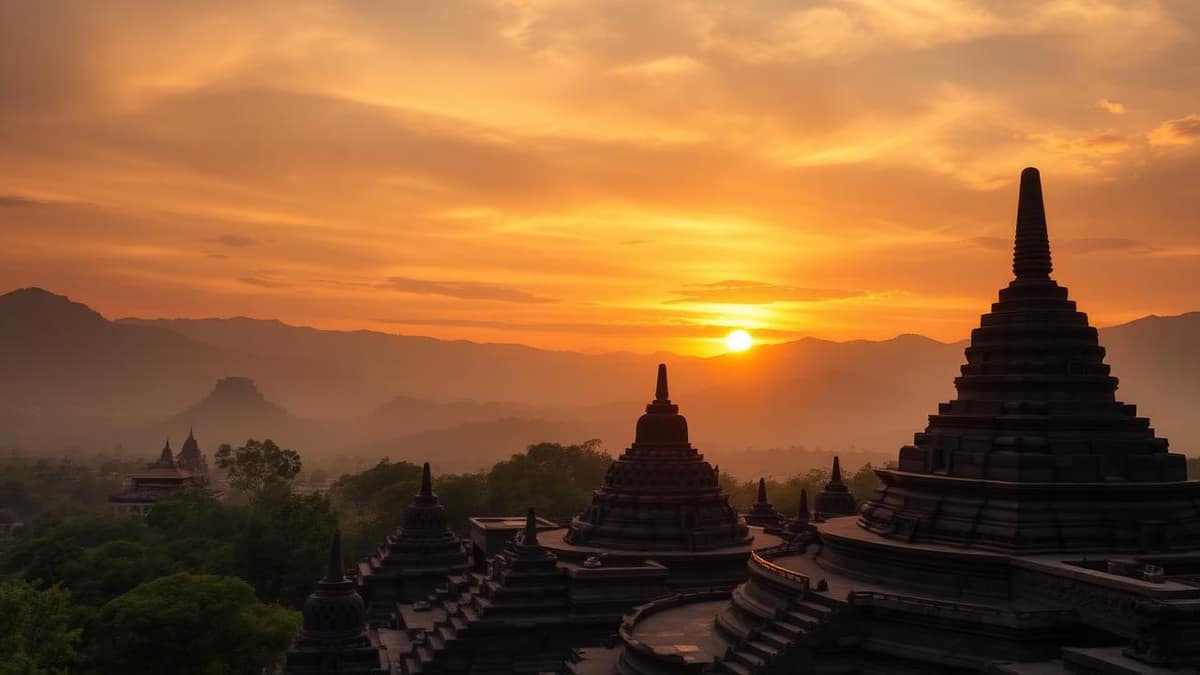
Borobudur is a 9th-century Buddhist monument about 40 km (a one-hour drive) northwest of Yogyakarta city, and it's the single most-booked day trip in Java. Nine stacked platforms rise into a central stupa, ringed by hundreds of Buddha statues and thousands of stone relief panels carved directly into the structure — the largest Buddhist monument on earth, and a UNESCO World Heritage Site. Most visitors experience it two ways: as a sunrise silhouette against the surrounding volcanoes, or as a slower midmorning walk through the reliefs once the tour buses have thinned out. Both are worth doing if you have the time; if you only get one shot, sunrise justifies the alarm clock.
The 3:30am Departure vs Staying in Magelang
There are two realistic ways to catch sunrise, and the difference between them is about an hour of sleep and roughly $20-40 a night in accommodation cost.
Either way, plan for a genuinely early, genuinely dark start. Bring a headlamp or phone flashlight for the walk between the entrance and the terraces — lighting on the grounds before dawn is minimal.
Upper Terrace Access Has Changed — Check Before You Book
This is the detail that trips up the most visitors. For years, people could walk freely across all nine levels of the monument, including the upper round terraces with their latticed stupas. In recent years, site authorities have restricted general access to the upper levels to reduce wear on the stone, at times requiring a separate permit, a certified guide, specific footwear, or a cap on how many visitors are allowed up at once. These rules have changed more than once already and may change again before your trip. Don't assume you can climb to the very top because an old blog post, a friend's photo, or last year's brochure says so — check the current access policy and exactly what your ticket or tour includes at the time you book, and confirm again a day or two before you go. A sunrise visit limited to the lower terraces is still worth getting up for; just don't be surprised if the top level isn't part of your ticket.
The Manohara Sunrise Option
The Manohara Hotel sits inside the Borobudur park grounds and has long run its own sunrise access arrangement, entering the site before the general public gates open. It's a reliable way to get inside early without joining a large tour group, putting you on the grounds while the sky is still dark rather than waiting at a checkpoint with everyone else. Exactly what's included, the entry time, and whether non-guests can join has shifted over the years, so check the current details directly when you book rather than relying on older trip reports.
Planning this trip?
Tours and day trips in Yogyakarta sell out first in July, August and over New Year. Booking ahead usually costs the same and guarantees the date.
See Yogyakarta tours & pricesBorobudur and Prambanan in One Day — Is It Too Rushed?
Prambanan is Java's great Hindu temple complex, a cluster of soaring stone towers on roughly the opposite side of Yogyakarta from Borobudur, about 50 minutes from the city center. Combining both in a single day is a common package, and it's doable, but be honest about the pace: sunrise at Borobudur, a couple of hours exploring the terraces and reliefs, an hour-plus transfer back across the city, then Prambanan in the early-afternoon heat before it closes. You'll see both sites, but on a few hours of sleep and a lot of time in a car, and neither temple gets your full attention. If you can spare two days, splitting them gives each site the unhurried visit it deserves — Prambanan in particular rewards a slower, cooler-hours walk around the main towers rather than a rushed one squeezed in after lunch. If a single day is all you have, it's still worth doing both; just clear the rest of that day off your itinerary.
Adding a Merapi Jeep Tour
Mount Merapi, one of Indonesia's most active volcanoes, sits north of Yogyakarta and is commonly bolted onto a Borobudur itinerary as a half-day jeep tour across the old lava fields and volcanic sand tracks left by past eruptions. It's a different kind of experience entirely — bumpy, dusty, scenic rather than historical — and works best as an afternoon add-on after a Borobudur-only morning, not stacked onto a day that also includes Prambanan. Fitting all three (Borobudur, Prambanan and Merapi) into one day is possible on paper but exhausting in practice; most travelers who want all three split them across two days instead.
What It Costs
Borobudur's entrance pricing runs on a two-tier system: a modest rate for domestic (Indonesian) visitors and a substantially higher one for foreign visitors, a structure common across Indonesia's major heritage sites. Guided sunrise tours from Yogyakarta that bundle transport, entrance and a guide typically run in the $35-75 per person range, depending on group size, whether Manohara early access is included, and whether Prambanan or Merapi is added on top. Independent travelers who arrange their own transport and buy tickets directly can spend less, but they lose the fixed pickup time and the local knowledge of a guide who knows which viewing point is least crowded that particular morning. Prices move with fuel costs and site-management changes, so treat these as planning ranges rather than quotes, and confirm the current entrance fee and tour price at the point of booking.
What to Wear
Borobudur is an active religious site as well as a monument, and modest dress is expected — shoulders and knees covered is the safe baseline. Sarongs are commonly provided or rentable at the entrance if you turn up under-dressed, but bringing your own saves a queue in the dark. Wear shoes you can climb steep, uneven stone stairs in; the platform steps are narrow and worn smooth in places, and flip-flops are a genuine hazard before dawn. Bring a light layer too — it's cool at 4am even in the tropics, and you'll be glad of it standing around waiting for the light to change.
Best Months for an Actual Sunrise
Java's dry season, roughly June to September, gives the best odds of a clear sky and an actual visible sunrise rather than a grey wall of cloud over the volcanoes. Outside that window, especially November through March, mist and rain are common enough that a fair number of "sunrise" tours end up watching the sky slowly lighten rather than seeing a defined sunrise. It's not a guarantee even in peak dry season, but it shortens the odds considerably. For how this fits the rest of a Java or Indonesia trip, see our month-by-month best time to visit Indonesia guide.
For hotel budgeting in Yogyakarta city or near the temple, our Indonesia Hotel Price Index has current nightly rate ranges by city, and if this is an early stop on a longer trip, our first-timer's guide to Indonesia covers the basics worth sorting out before the early alarm goes off.
Frequently Asked Questions
Can you still climb to Borobudur's upper terraces for sunrise?
Access to the upper round terraces has been restricted in recent years to protect the stonework, sometimes requiring a permit, certified guide, or specific footwear, and the rules have changed more than once. Check the current access policy for your specific ticket or tour at the time of booking rather than assuming full access.
Is it worth combining Borobudur and Prambanan in one day?
It's doable but genuinely rushed — sunrise at Borobudur, an hour-plus transfer, then Prambanan in the afternoon heat before it closes. If you can spare two days, splitting them lets you visit each site without racing the clock.
How much does a Borobudur sunrise tour cost?
Guided sunrise tours from Yogyakarta bundling transport, entrance and a guide typically run $35-75 per person, more if Manohara early access, Prambanan or a Merapi jeep tour is added. Foreign-visitor entrance fees are notably higher than domestic rates, and prices shift over time, so confirm current pricing when you book.
Ready to Explore?
Browse curated tours and activities across Indonesia with our trusted partners.
View Tours & Activities